The McQuarrie Legacy
The paintings that convinced a studio to build a galaxy
Ralph McQuarrie didn’t just illustrate Star Wars — he made it possible. When George Lucas walked into 20th Century Fox to pitch his space opera, executives were bewildered by his descriptions of Wookiees, lightsabers, and planet-destroying battle stations. It was McQuarrie’s concept paintings that made them believe.
McQuarrie brought a fine art sensibility to science fiction. His paintings were luminous, atmospheric, and emotionally resonant in ways that concept art rarely achieved. The twin sunset on Tatooine wasn’t just a setting — it was loneliness made visible. Darth Vader’s silhouette wasn’t just a costume — it was dread given form.
His influence extends far beyond Star Wars. McQuarrie’s approach — treating concept art as a form of visual storytelling rather than technical specification — transformed how the entertainment industry develops visual properties. Every concept art department in Hollywood works in the shadow of what McQuarrie established.
Within the Star Wars universe, McQuarrie’s aesthetic DNA is inescapable. The angular architecture of the Empire, the organic warmth of the Rebellion, the vast scale of space — all of these visual themes trace back to his original paintings. Artists like Doug Chiang, Christian Alzmann, and Ryan Church have all acknowledged McQuarrie as the wellspring from which the Star Wars visual tradition flows.
Works in This Collection
Tatooine Binary Sunset — Concept Painting
Ralph McQuarrie
Darth Vader — Concept Painting
Ralph McQuarrie
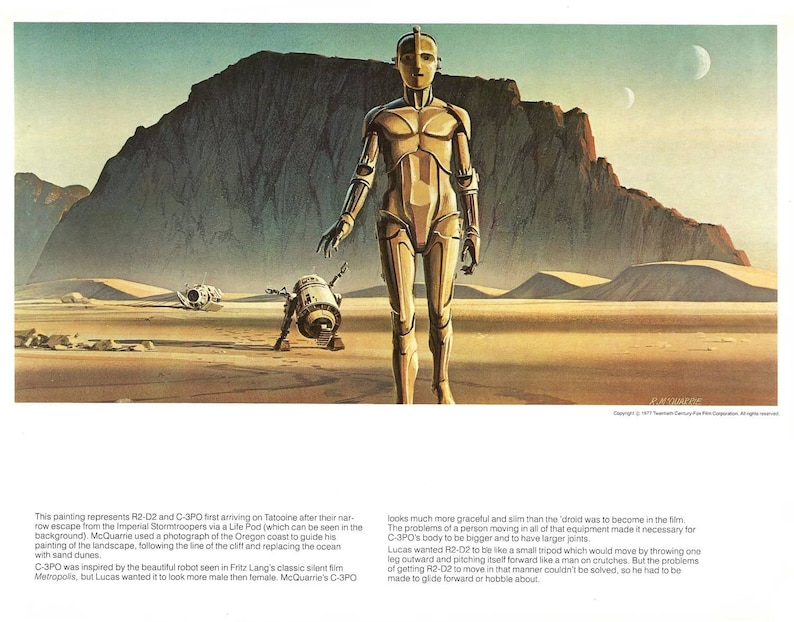
Droids in the Desert — Concept Painting
Ralph McQuarrie
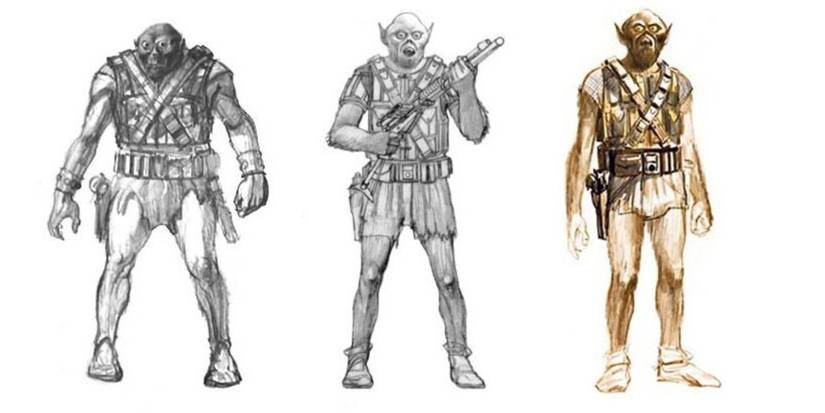
Chewbacca — Character Concept
Ralph McQuarrie
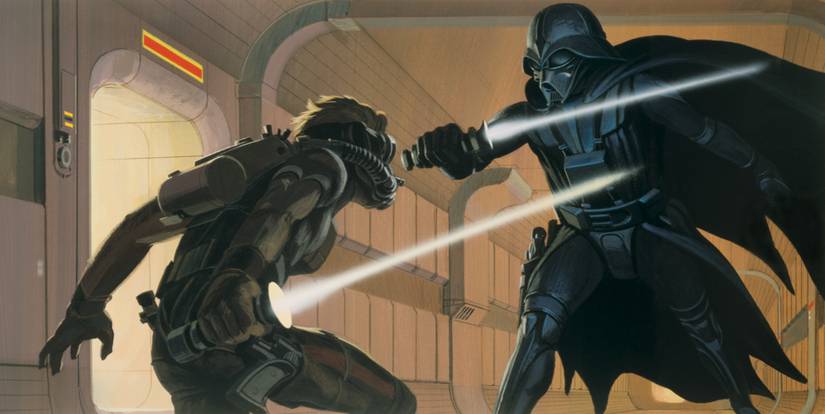
Lightsaber Duel — Concept Painting
Ralph McQuarrie