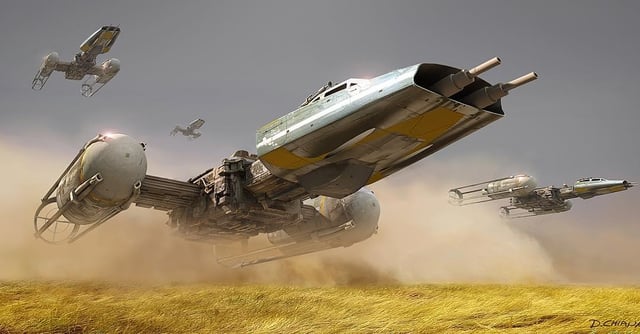
Chiang's Digital Revolution
How one artist redefined Star Wars for a new century
When George Lucas began pre-production on The Phantom Menace in the mid-1990s, he needed an artist who could match McQuarrie’s visionary scope while working at the speed digital tools now demanded. He found Doug Chiang.
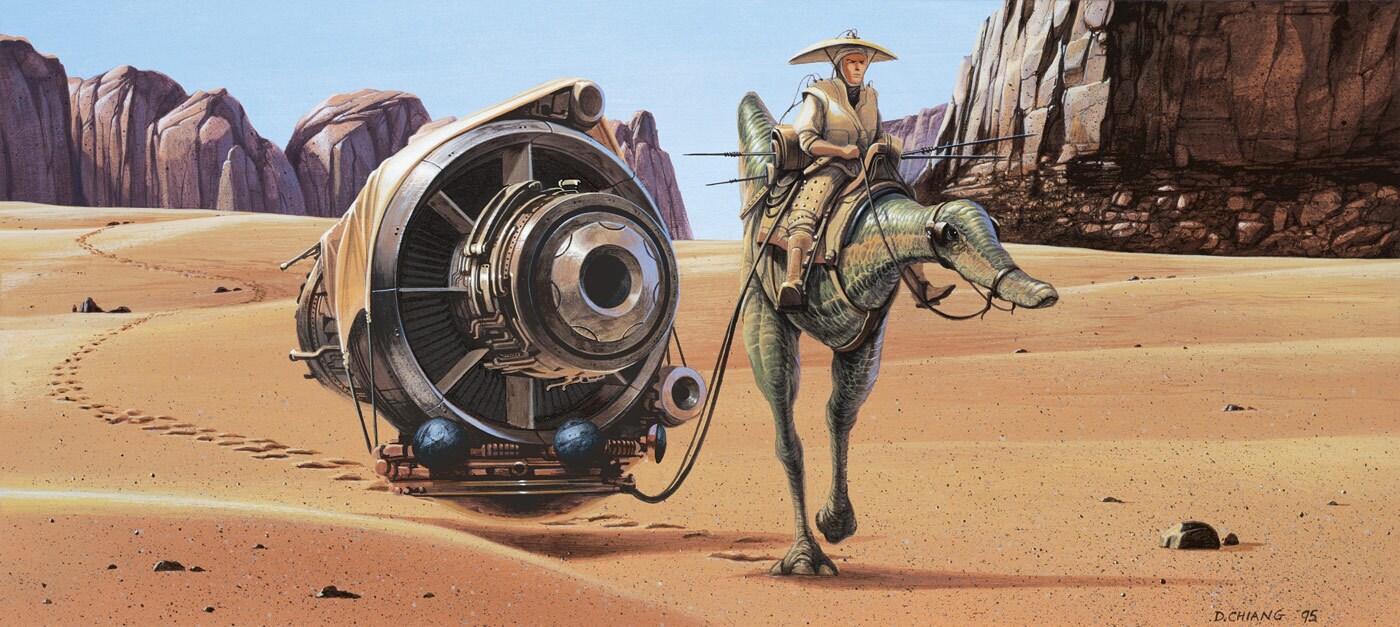
Chiang’s challenge was enormous: design an entire era of the Star Wars galaxy that felt connected to the Original Trilogy yet distinctly different. His solution was an aesthetic of refined elegance — chrome surfaces, organic curves, Art Nouveau flourishes — that would visually decay over the Prequel Trilogy’s timeline into the angular brutalism audiences already knew.
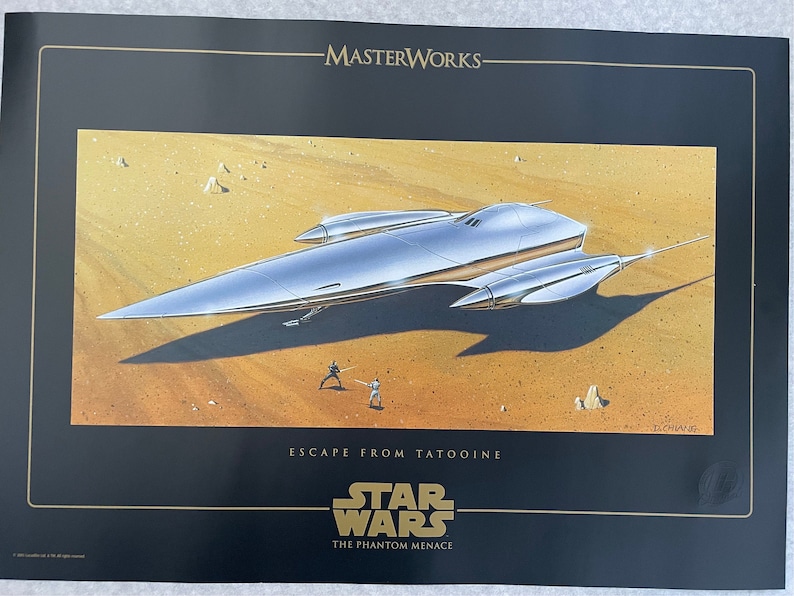
The Naboo N-1 Starfighter exemplifies this approach: its chrome finish and flowing lines are a deliberate contrast to the battered, utilitarian X-Wing. Coruscant’s planet-spanning cityscape showed a Republic at its zenith. The underwater Gungan city pushed Star Wars into biological architecture that felt genuinely alien.
Chiang was also a pioneer of digital concept art. Where McQuarrie spent days on a single acrylic painting, Chiang could produce dozens of digital variations in the same time — a workflow that let Lucas explore visual options with unprecedented breadth. This digital-first approach became the industry standard and remains the dominant method for concept art production today.