Colin Cantwell's Star Destroyer Prototypes: Engineering an Icon
Artist: Colin Cantwell · 1975
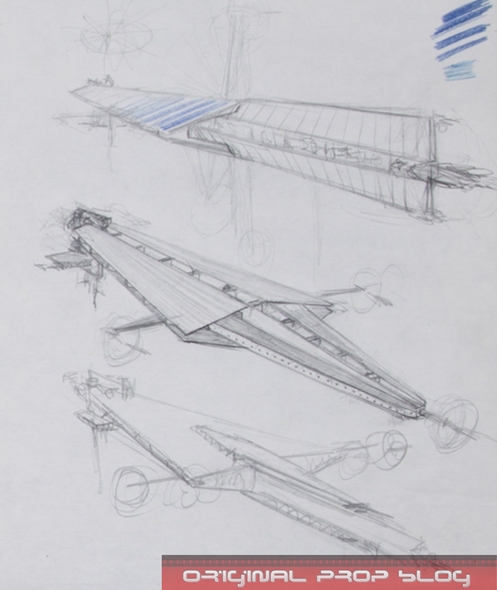
Before the Imperial Star Destroyer became cinema's most recognizable warship, Colin Cantwell built a dozen foam-core models exploring shapes that ranged from elegant to terrifying.
Colin Cantwell's contribution to the original Star Wars is often reduced to his famous X-wing and TIE fighter prototypes, but his work on the Imperial Star Destroyer may be his most consequential design achievement. Working from George Lucas's brief — "a warship so large it fills the screen and keeps going" — Cantwell produced twelve distinct foam-core models between January and April 1975, each exploring a different philosophy of what galactic military power should look like.
The earliest prototypes were surprisingly organic. Cantwell's first model featured a curved, almost nautical hull inspired by aircraft carriers and submarine conning towers. Lucas rejected it as too familiar. The second iteration went the opposite direction — an angular crystalline form that resembled a weaponized mineral formation. "George liked the aggression but wanted something more deliberate," Cantwell recalled in a 1997 interview. "He wanted it to look designed by a bureaucracy."
By the sixth prototype, Cantwell had arrived at the basic wedge shape, but the proportions were still in flux. Several models from this period show a much stubbier triangle, almost equilateral, with the bridge tower centered rather than set back. It was model number nine that introduced the elongated dagger profile and the distinctive bridge tower silhouette that would define the final design.
What makes these prototypes remarkable is how each one tells a different story about the Empire. The curved models suggest a navy with history and tradition. The crystalline versions imply alien menace. The final wedge communicates exactly what Lucas wanted: industrial, efficient, overwhelming. Cantwell found the shape of fascism in foam core and model paint, and cinema has never forgotten it.
Only three of the twelve original prototypes survive. Two are held by Lucasfilm Archives, and one remains in a private collection. Together they document one of the most important industrial design exercises in film history — the iterative search for a shape that would make audiences feel the weight of an empire before a single line of dialogue was spoken.